Categories
Monographs

All Data are Local


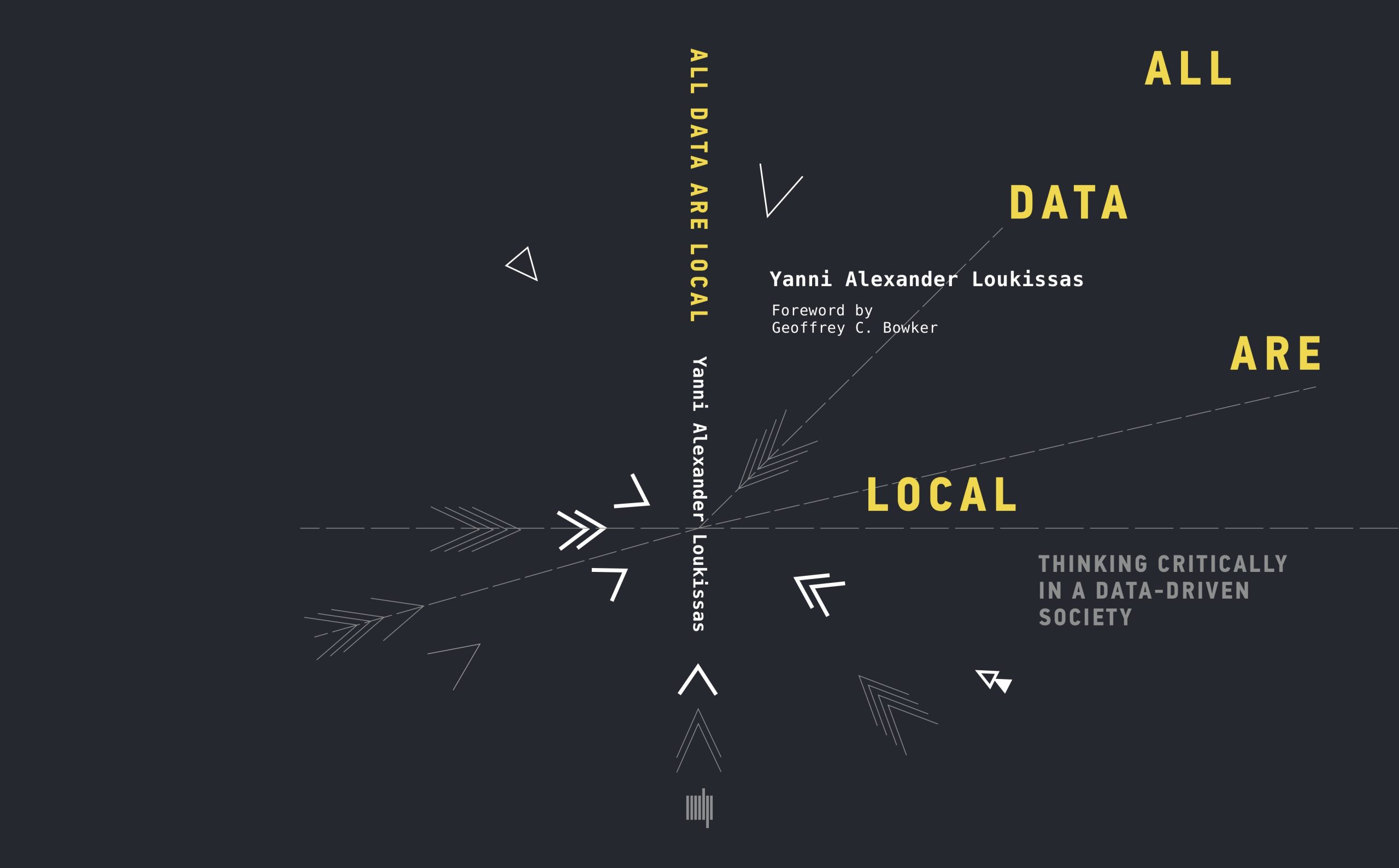
In our data-driven society, it is too easy to assume the transparency of data. Instead, Yanni Loukissas argues, we should approach data sets with an awareness that data are created by humans and their dutiful machines, at a time, in a place, with the instruments at hand, for audiences that are conditioned to receive them. All data are local. The term data set implies something discrete, complete, and portable, but it is none of those things. Examining four sources important for understanding the state of public data in the United States—Harvard’s Arnold Arboretum, the Digital Public Library of America, UCLA’s Television News Archive, and the real estate marketplace Zillow—Loukissas shows us how to analyze data settings rather than data sets.

Loukissas sets out six principles: all data are local; data have complex attachments to place; data are collected from heterogeneous sources; data and algorithms are inextricably entangled; interfaces recontextualize data; and data are indexes to local knowledge. He then provides a set of practical guidelines that follow. To make his argument, Loukissas employs a combination of qualitative research on data cultures and exploratory data visualizations. Rebutting the “myth of digital universalism,” Loukissas reminds us of the meaning-making power of the local.

Now available for purchase through the MIT Press website.

Endorsements:

All Data Are Local is a tremendous contribution to emerging scholarship that seeks to counter transcendent narratives of data and recover its social, cultural, historical, geographical, and material contexts. Loukissas grounds an inspiring theoretical analysis in rich and detailed examples that give us valuable insight into how data comes to be, what datafication produces, what it obscures—and how we might craft alternatives.

Paul Dourish, Chancellor’s Professor of Informatics, University of California, Irvine, author of The Stuff of Bits: An Essay on the Materialities of Information

In a time when many are trying to understand what comes after big data, Loukissas offers a crucial reframing of data as a thing rich in context and deeply connected to place and to local knowledge. Designers, developers, and data scientists will find much value in the detailed, practical case studies. Essential reading for anyone interested in what the future of data holds.

Jer Thorp, Data Artist

In an era of data hype, where scientists and politicians make claims about data that bounce between the messianic and the apocalyptic, Yanni Loukissas has written a sober corrective. We need to understand where, how, and with what media data gets made. What he calls the locality of data is the key to turning data into real knowledge, rather than just more and more information. Loukissas is a rare participant in this debate—one who actually knows how to work with data—and he writes about the beautifully designed things he makes with an elegant clarity and a fine critical eye. If you want to see the ways in which data, design, and politics can best inform each other, you need to read this book.

Laura Kurgan, Associate Professor of Architecture and Director for the Center for Spatial Research, Columbia University

Reviews:
Journal of Information Research
Information, Communication, and Society
Categories
Design Investigations

Surfacecities

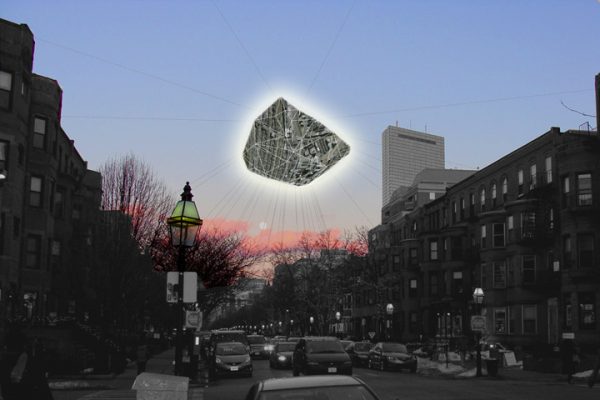
Surfacecities is a research and teaching initiative, established to study our changing images of cities in the context of a new visual culture developing around information technologies. The website http://www.surfacecities.com hosts a range of projects developed by faculty and students in the Department of Architecture at Cornell University. We are using information technologies to explore new ways of reading and handling cities for a variety of purposes, from environmental activism to extreme commuting. Our approach is to create dynamic, graphic and situated projects that extend or challenge established theories of urbanism. This work cuts across numerous fields (architecture, information science, and urban studies) in order to challenge traditional conceptions of the city that are static, depersonalized, and focused primarily on built form. In addition, it suggests new configurations of people, computers and cities that shift the discourse on human-computer interaction towards human-computer-environment interaction.

Credits:

with John Zissovici

Categories
Design Investigations

Visual Apollo

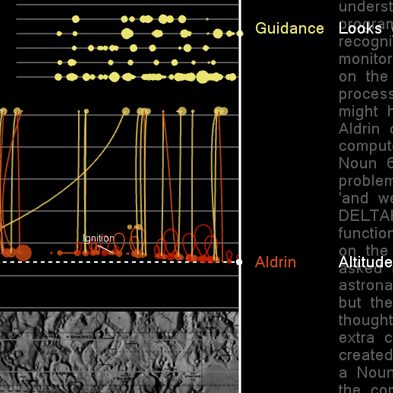
Data visualization can bring distributed social and technical relationships into view for professionals who study, design, or operate within complex computer-human systems. In traditional studies of computer-human relationships, qualitative and quantitative data are kept separate; sensor data and numerical calculations are graphed and charted, while human communications and interactions remain unseen. We believe a common format for examining both quantitative and qualitative data can reveal the multi-channel interactions in teams of humans and machines. Using the historical example of the 1969 Apollo 11 moon landing, this research presents opportunities and challenges in the visual display of social and technical data: integrating diverse sources, creating broadly accessible representations, and including time as an interactive variable. It introduces a timely and long-term endeavor, the development of a visual language and interface connecting researchers, designers, and operators in the study of distributed computer-human interactions.

Visual Apollo is available as a journal article or app for the mac here

Credits:

Created with David Mindell and the MIT Laboratory for Automation, Robotics, and Society

Categories
Design Investigations

The Life and Death of Data


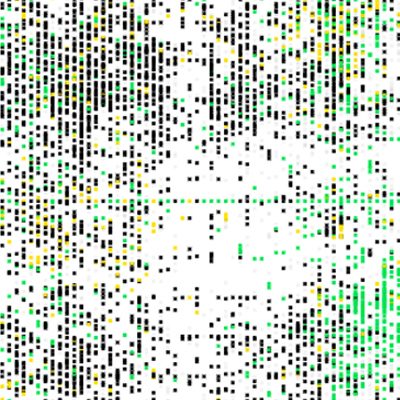
In collections of scientific and cultural history that are too big to see, data act as virtual handles for rare and delicate artifacts from the past. At the Arnold Arboretum, a long-lived collection of trees, vines and shrubs managed by Harvard University, landscapes from around the world and across time are stitched together by data. However, data are worthy of study themselves. Created in varied social and technological eras, they register the organizational structures and values of their time. Through a combination of data visualization and interviews with Arboretum staff, this data documentary illuminates what data can teach us about their own social and material histories, as well as how to study institutions of collecting digitally. http://lifeanddeathofdata.org/ (Note: No longer works on Chrome)

Credits:
The interactive features of this project were designed and implemented in collaboration with Krystelle Denis. Our work was supported by The Lasky-Barajas Dean’s Innovation Fund for Digital Arts and Humanities at Harvard University and made possible by members of metaLAB and the Arnold Arboretum.

Categories
Monographs

Co-Designers

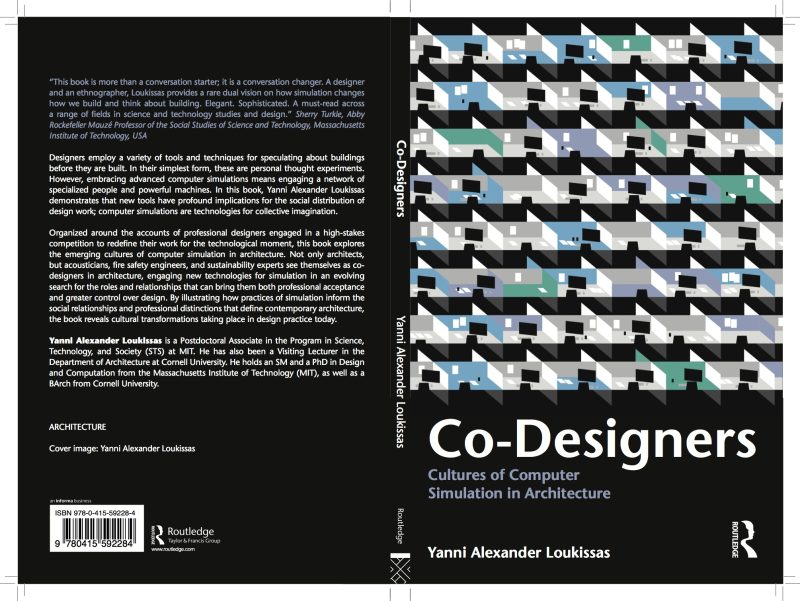
Designers employ a variety of tools and techniques for speculating about buildings before they are built. In their simplest form, these are personal thought experiments. However, embracing advanced computer simulations means engaging a network of specialized people and powerful machines; computer simulations are technologies for collective imagination. In this book, I critically examine new design tools and their implications for the social distribution of creative work.

Organized around the accounts of professional designers engaged in a high-stakes competition to redefine their work for the technological moment, this research explores the emerging cultures of computer simulation in architecture. Not only architects, but acousticians, fire safety engineers, and sustainability experts see themselves as co-designers in architecture, engaging new technologies for simulation in an evolving search for the roles and relationships that can bring them both professional acceptance and greater control over design. By illustrating how practices of simulation inform the social relationships and professional distinctions that define contemporary architecture, this book reveals the cultural transformations taking place in design practice today.

Published by Routledge in 2012.

What people are saying about Co-Designers:
“This book is more than a conversation starter; it is a conversation changer. A designer and an ethnographer, Loukissas provides a rare dual vision on how simulation changes how we build and think about building. Elegant. Sophisticated. A must-read across a range of fields in science and technology studies and design.”
– Sherry Turkle, Abby Rockefeller Mauzé Professor of theSocial Studies of Science and Technology, Massachusetts Institute of Technology, USA

“One of the things that often gets missed in stories of technological change is the way that it often accompanies changes in professional relations, and that’s something that Co-Designers illustrates beautifully”
– Paul Dourish, professor, Donald Bren School of Information and Computer Sciences at the University of California at Irvine, USA

Read about Co-Designers in the MIT News:
“Bits of buildings: How is computing changing the architect’s job? In a new book, an MIT researcher looks at the influence of high-tech simulations on the profession of architecture.” -Peter Dizikes, MIT News Office